Why a Train Goes Through a Building in Chongqing: A Local’s Take on the ‘Magic City’ Phenomenon
Trains passing through buildings: Chongqing’s unique urban spectacle
I’m Eden Xie, a local who grew up climbing hills and traversing slopes in the mountain city of Chongqing.
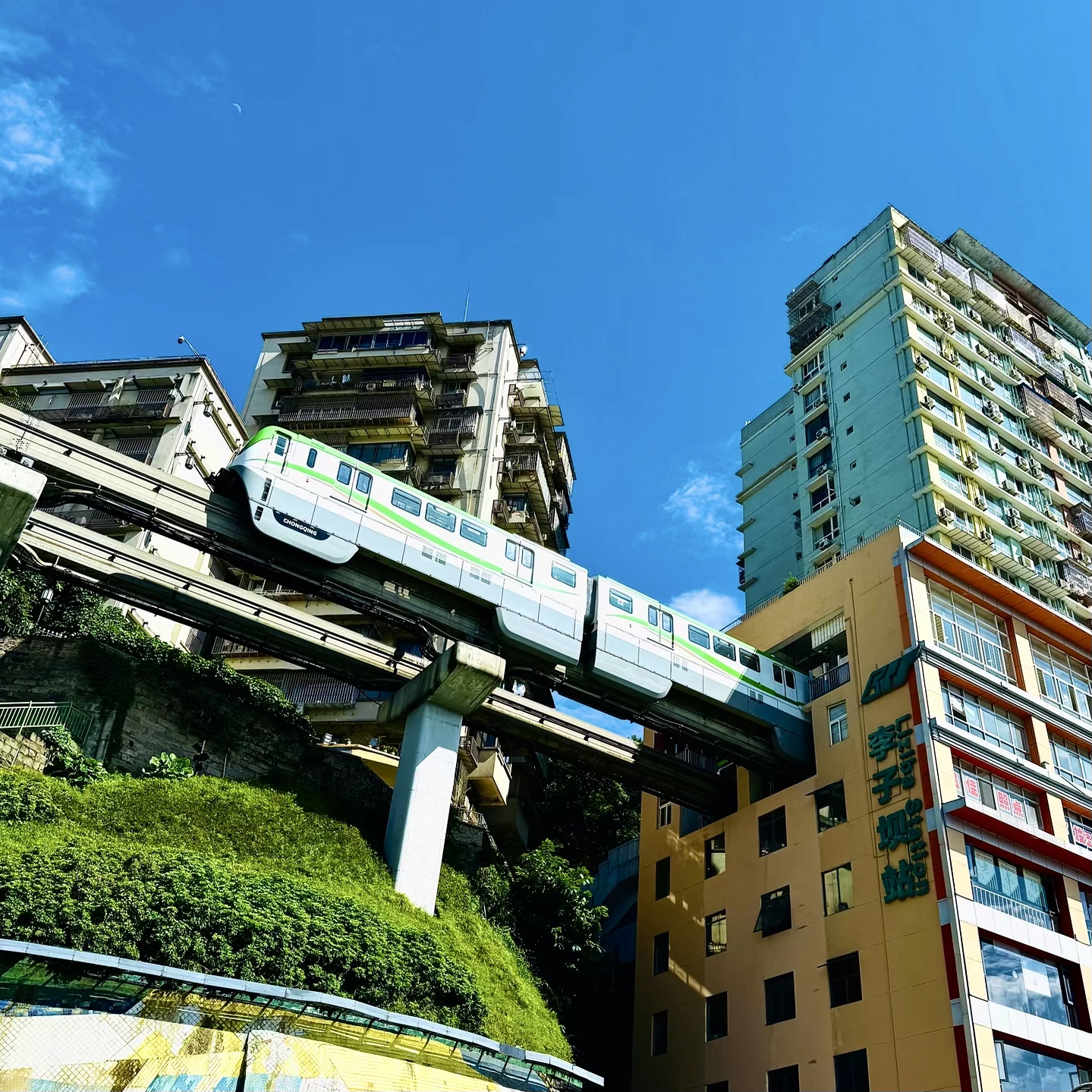
If you’ve ever seen footage on Instagram of trains in Chongqing’s Liziba district seemingly passing through buildings—what we locals call the rail transit system, though it resembles a monorail, and plunging straight into a residential tower, you’d be utterly stunned. Many ask me, “Eden, how did they even think of this? Is it just a gimmick to attract tourists?” No, no, no!
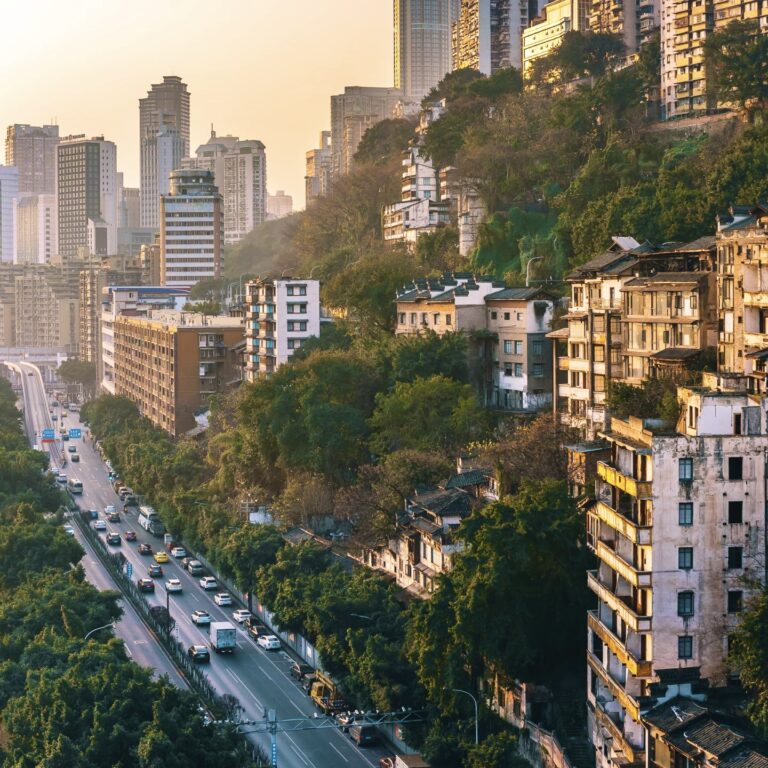
Chongqing, often called the “Mountain City,” is globally renowned for its dramatic topography and innovative urban planning solutions. Among the most striking is the Liziba Light Rail Station, where trains literally pass through residential buildings, creating a rare and captivating urban landscape. This unconventional design wasn’t conceived as a tourist attraction but as a response to the practical challenges of rapid urbanization in the 1990s.
Today, as a native of Chongqing, I’ll take you behind the scenes at Liziba Station. We’ll explore the history behind this engineering marvel, how it became one of Chongqing’s most iconic landmarks, and its ongoing role in shaping the city’s transportation future. Whether you’re a traveler, an architecture enthusiast, or simply intrigued by unconventional urban design,
This is not just an architectural marvel—it embodies the survival wisdom of us Chongqing locals: “Living in harmony with the mountains.”
Chongqing’s Unique Topography and Transportation Challenges
The Mountain City’s Geographical Characteristics: Building Within the “Folds”
If you ask me what my first impression of Chongqing was, it would undoubtedly be “endless slopes to climb and curves to navigate.” As a quintessential mountain city, our urban landscape isn’t spread across flat terrain but rather carved into the folds of the mountains.
This unique geographical trait dictates that our transportation planning must defy conventional approaches. In northern plains cities, blocked roads can be bypassed with a detour, but in Chongqing, mountains flank your left, rivers your right, and a steep slope hundreds of meters high might loom directly ahead. Such extreme traffic challenges make every new driver in Chongqing want to throw their GPS out the window. This terrain limits land utilization and forces urban design to seek solutions in vertical space, which explains why you might find yourself on the “first floor,” only to open the window and discover ten more stories below.
Transportation Innovation in Complex Terrain: No Roads? We’ll Fly Through the Sky and Dive Underground
Faced with this “hell-level” challenge, Chongqing residents have delivered a series of hardcore transportation innovations. Elsewhere, transportation is merely a means to get from point A to B. In Chongqing, it’s an art form in itself.
To adapt to our mountainous terrain, we’ve developed the world’s most fantastical rail transit system. Take the iconic suspended monorail, for instance—its climbing ability and tight turning radius seem tailor-made for Chongqing’s slopes.
- From Conflict to Coexistence: As I mentioned earlier at Liziba Station, when rail construction clashed with residential development, we didn’t opt for demolition or rerouting. Instead, a design team led by Professor Ye Tianyi spent two full years ingeniously devising a “station-bridge integration” solution.
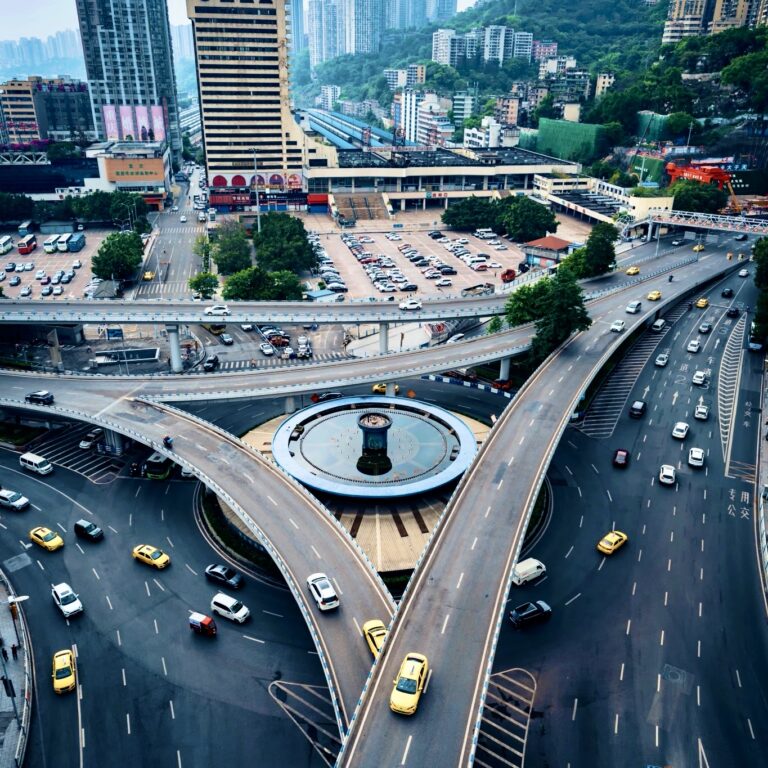
- Three-Dimensional Thinking: We not only made trains pass through buildings but also built the Yangtze River Cableway connecting the peninsula and constructed the rollercoaster-like Sujiaba Interchange.
This innovation isn’t for show—it’s for survival. Just as we harnessed elevation differences for nightscapes in the “Glory Project,” Chongqing’s transportation innovations are fundamentally a “game of extremes” between humanity and nature. Here, you’ll discover that what seemed like obstacles ultimately became part of the landscape.
When it comes to Liziba, visitors might think it’s just another trendy Instagram spot. But to us Chongqing locals, this place perfectly embodies the spirit of our mountain city: stubborn, resourceful, and tinged with that magical “no choice but to make it work” attitude.
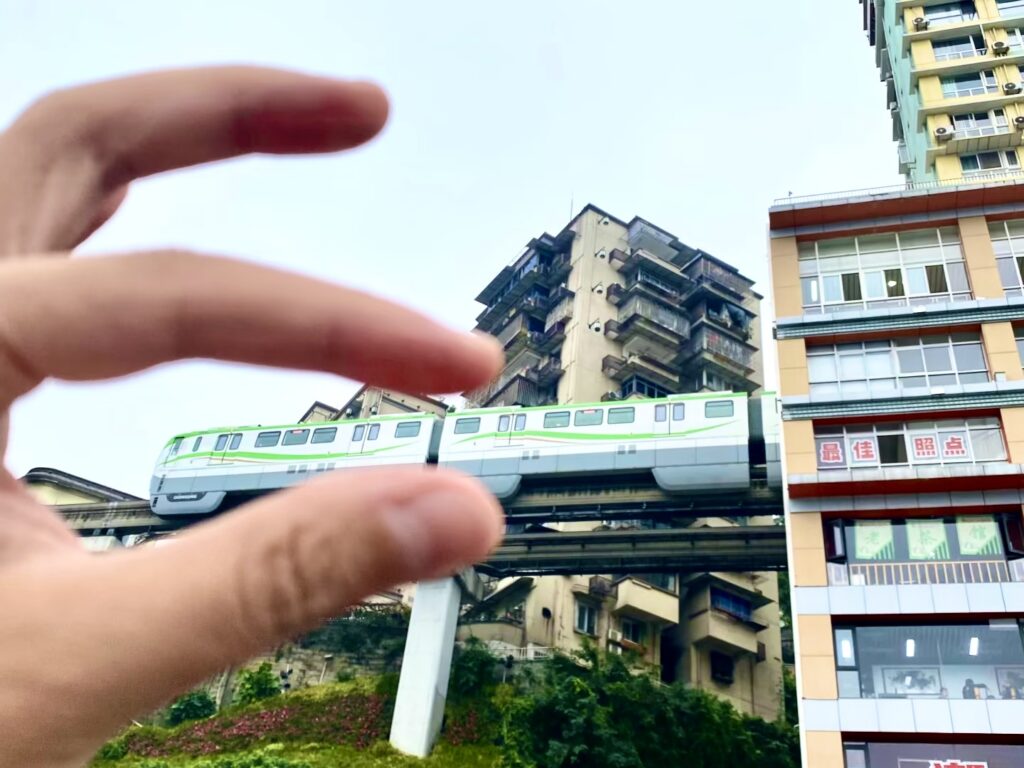
People are getting creative at the Liziba light rail that runs through a building — even pretending to pinch the train with their fingers.
Let’s rewind to the 1990s and see how this train actually managed to squeeze through a building.
The History and Origins of Liziba Light Rail Station
The True Story Behind Liziba Light Rail’s Building-Penetrating Feat: A Game of “Who Gives Way to Whom”
When people first see a train passing through a building, their initial reaction is often: “Chongqing folks sure know how to have fun—did they build this as a tourist attraction on purpose?”
In truth, Liziba Light Rail Station (affectionately nicknamed “Grandma Plum” by locals—though its moniker has been twisted into countless online variations), its status in old Chongqing hearts remains unshakable.
The archives of Chongqing’s light rail history reveal a fascinating tale. In the late 1990s, construction began on Chongqing Rail Transit Line 2. As China’s first suspended monorail, the project faced unprecedented challenges. When the planning blueprints reached the steep riverside slope at Liziba, a major problem emerged: the tracks needed to run along the cliff edge, yet the land had already been sold to developers for residential construction.
Communication Breakdowns and Conflicts in the 1990s: The “Deadlocked Rivals” Situation Caused by Departmental Silos
To put it bluntly, the Chongqing government faced some communication hiccups back then. The transportation department would present plans, saying, “We need to lay tracks here!” Only for the land planning department to respond, “Sorry, that land has already been approved for a developer to build a skyscraper.”
This was a classic transportation planning conflict. In flatland cities, solutions are straightforward: either relocate buildings or reroute roads. But in Chongqing, with the Yangtze River to the front and steep slopes to the rear, there was simply no room to maneuver. The light rail route issue reached an impasse: developers faced massive losses from demolition compensation and land depreciation if construction halted; residents would lose vital transit if tracks weren’t laid. Both sides dug in their heels, refusing to budge.
Urban Planning Solutions and Adaptations: From “Zero-Sum Game” to “Station-Bridge Integration”
Since neither could budge, why not merge them? This proved a stroke of genius in Chongqing’s urban planning history.

Ye Tianyi, a faculty member at the School of Civil Engineering at Chongqing University, became the chief designer of Liziba Station and its residential building at the age of 30. He led a groundbreaking design—unprecedented in China at the time—by allowing Chongqing Rail Transit Line 2 to run directly through the building.
To achieve coexistence between buildings and railways, a design team led by Professor Ye Tianyi of Chongqing University devised an unprecedented transportation solution: synchronizing the design and construction of the station and residential buildings.
- Independent Support: Despite their close embrace, they remain two distinct entities. The tracks rest on their own six independent pillars, completely separate from the building’s columns, with a 20-centimeter gap between them.
- Win-Win Outcome: Floors 1 to 5 house commercial spaces, floors 6 to 8 accommodate the station, and floors 9 to 19 serve as residential units.
As a local, what impresses me most is this spirit of making something extraordinary out of the smallest space. This magical feat wasn’t about showing off—it was about keeping the city alive. Back then, this innovation directly filled a gap in China’s rail transit construction, turning Liziba into a case study for architects worldwide.
My insider tip:
If you visit Liziba, don’t just snap photos from across the street. Hop on Line 2 and experience the thrill of plunging from a dark tunnel into residential buildings, then suddenly catching sight of the Jialing River. That split-second convergence of “mountains, water, buildings, and rail” is the real essence of Chongqing!
When it comes to Liziba, visitors always ask: “Eden, which came first—the building or the train? Do the ribs in residents’ pots shake off the table?”
No need to worry. We Chongqing folks approach our work with “meticulous precision tempered by a wild spirit.” Let me take you inside this magical structure to uncover the ingenuity our local designers have woven into its fabric.
The Architecture and Design of Liziba Light Rail Station
Simultaneous Construction of Tracks and Buildings: A Mutual “Wedding”
We Chongqing locals often say, “If we can’t be apart, we might as well live together.” The most remarkable aspect of Liziba’s architectural design lies in how the building and rail line aren’t about “one yielding to the other,” but rather a perfect example of construction and rail integration.
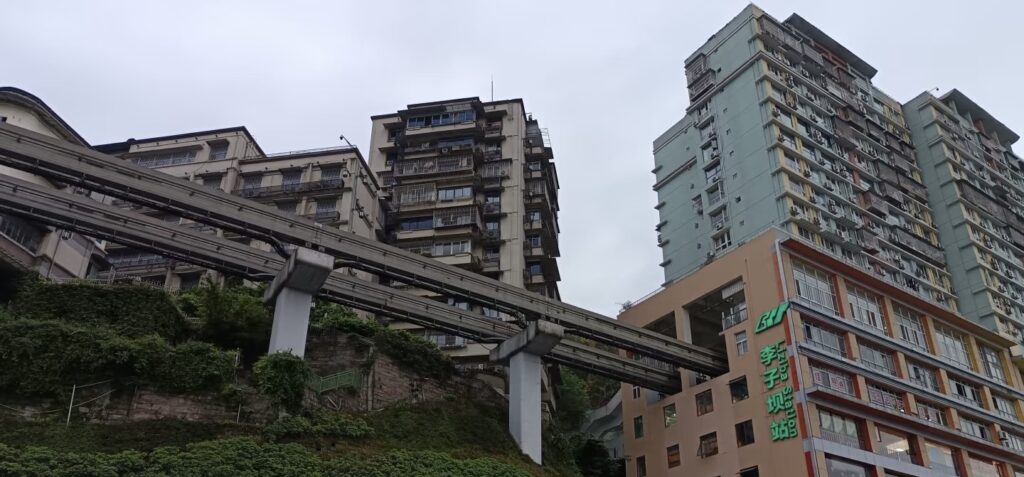
construction phase of Liziba station with the skeletal frame of the building around the tracks
When Professor Ye Tianyi’s design team tackled Chongqing’s rail project, they faced a world-class challenge. To achieve seamless integration, they treated both the tracks and the building as a single living entity, nurturing them in sync. From its 1998 inception to its 2004 opening, years of meticulous refinement ensured the rail beams passed through the building with needle-eye precision, operating without interference.
Interview with Mr. Ye Tianyi
What made you accept this project, and how did you come up with the unusual idea of a train through a building design?
Ye Tianyi: At the time, I simply thought the project was interesting and challenging. I never imagined it would become one of Chongqing’s most famous landmarks.
A real estate developer commissioned me. Back then, Chongqing Rail Transit Line 2 required a station to be built at Liziba Station, but the land designated for the station already belonged to the developer. There were two possible solutions: reroute the rail line or allocate a different piece of land to the developer. Neither option was practical.
So we proposed combining the rail station with a residential building. That’s how the now-famous Train Through Building concept was created.
At the time, there were no similar cases to reference. We had to conduct all the design and feasibility studies ourselves. It took six months just to approve the integrated station-and-residence concept. Our team of 13 people revised the major design six times over two years before finalizing the plan.
What was the biggest challenge during the project?
Ye Tianyi: The greatest challenge was managing the relationship between the rail structure and the residential structure. The train system is dynamic—it moves—while the building is static. The external forces acting on each are completely different, which means the engineering requirements were entirely distinct. Balancing these differences was the core technical difficulty of making the Train Through Building design safe and workable.
How long did the entire design process for the Liziba Station project take?
Ye Tianyi: From the initial feasibility studies to the completion, the whole process took about two years. It was definitely challenging, no question about that. But at the time, we were in our prime. Most of our team members were between 27 and 30 years old, full of energy and confidence. When we faced difficulties, we truly believed we could handle them—and we did.
Lizi Ba Station is an elevated side-platform station on Chongqing Rail Transit Line 2. Located on the eighth floor of the Chongqing Rail Transit Company property building, it bears the station code 207. Situated at the intersection of Jialing New Road and Guihua Garden Road in Yuzhong District, Chongqing, it faces the Jialing River to the north and backs onto Guihua Garden Road. It is the only station within a building along the entire Chongqing Rail Transit Line 2.
Completed in March 2004, Liziba Station is China’s first elevated monorail station coexisting within a commercial-residential building. It occupies a site area of 3,100 square meters with a total floor area of 6,000 square meters. Situated on the 6th and 7th floors of the commercial-residential building at No. 39 Liziba Main Street along the Jialing River, it gained worldwide fame as an iconic “viral station” for its unique feature of “a train passing through the building.” Designed, constructed, and commissioned simultaneously with the building, the station employs a “station-bridge separation” structure. The monorail bridge and the building’s structural support systems are independently configured, effectively resolving structural force transmission and vibration issues between the two entities.
Additionally, the monorail train utilizes low-noise, low-vibration pneumatic rubber tires and air springs to support the vehicle body, minimizing vibration and noise impacts during operation. This enables harmonious coexistence between the station and the commercial-residential building, successfully achieving intensive utilization of urban land resources.
Floor Structure and Functional Layout: Spatial Magic Through Layering
In Chongqing, space is meant to be stacked. The Liziba building’s design resembles a sandwich, with each floor dedicated to an immutable function:
- Commercial and Residential Zones: Floors 1 to 5 house bustling shops (now a hub for many cultural and creative stores), while floors 9 and above are quiet residential units.
- Rail Transit Zone: The core floors 6 to 8 form the station area where trains shuttle through.
This vertically integrated layout achieves a perfect balance between commerce, residential living, and transportation at a single coordinate point. You can head downstairs to grab some wontons, then hop on the rail transit right upstairs—this seamless lifestyle is something only Chongqing can pull off so effortlessly.
Vibration and Noise Reduction Technology: “Black Tech” Quieter Than a Washing Machine
Now, the part everyone worries about most—noise. Time to get technical
Truth is, when trains pull in, people inside the building barely notice. Credit goes to our extreme vibration design and noise reduction technology.
- Structural “Physical Isolation”: While visually connected, the building’s columns and track support pillars are completely separated. Trains run on their own pile foundations, preventing vibrations from reaching the building’s walls.
- Gentle Rubber Tires: Our Line 2 uses a straddle-type monorail with specially designed inflatable rubber tires. This produces a muffled sound, completely different from the sharp noise of steel wheels grinding against tracks in conventional subways.
- Air Spring Suspension: This railway noise control method makes the train feel like it’s gliding on cotton when entering the station.
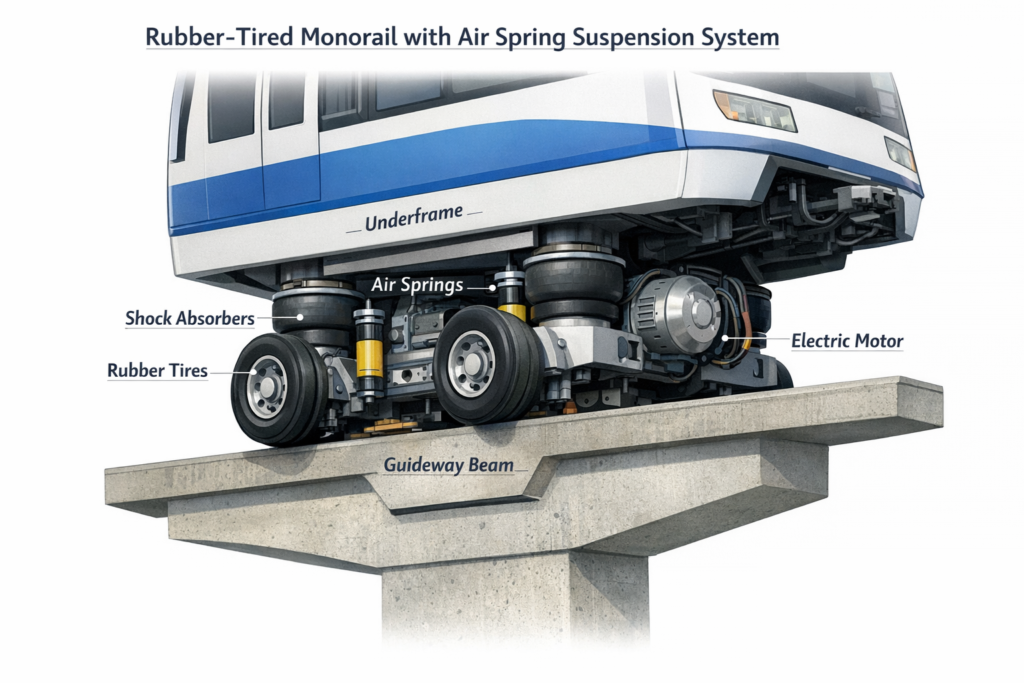
I once brought a sound level meter to experience it nearby and found that when the train passes through the building, the measured noise is around 75.8 decibels. What does this number mean? It’s comparable to the ambient noise we hear on busy streets, and even quieter than renovation sounds in some older neighborhoods.
My Quick Tip:
If you want to see the most amazing part of this building, remember to head to the 8th-floor platform. Standing there as the river breeze sweeps past, you’ll watch the train glide silently just meters below your feet, disappearing deep into the building. Only then will you truly understand why Chongqing is called the “3D Magic City.”
When it comes to Liziba, its status in our hearts as Chongqing locals has long transcended that of an ordinary commuter station—it’s become the city’s “soulful emblem.” If you haven’t witnessed that train disappearing into the building, you can’t honestly say you’ve been to Chongqing. Let me show you how this station transformed from an architectural conundrum into a globally renowned symbol of Chongqing.
The Cultural Symbolism and Tourism Value of Liziba Light Rail Station
The Cultural Significance of Liziba Light Rail Station: An Embodiment of the Mountain City’s Resilient Spirit
In many cities, landmarks may be skyscrapers or ancient city gates, but in Chongqing, Liziba embodies a city spirit that says “no obstacle is insurmountable.”
This train-through-building phenomenon carries profound cultural resonance. It transcends mere visual spectacle, embodying the unconventional, adaptable wisdom of Chongqing’s people. As I heard from some longtime residents, they don’t find it strange at all. Instead, they feel a sense of security in this “station-within-a-building” layout, a comforting resonance between home and the city’s pulse. It showcases Chongqing to the world: a city that thrives with such vibrancy and dignity, pushing the limits of survival in vertical space.
Lizi Ba Light Rail Station as a Major Tourist Attraction: The World Looks Up
Today, Lizi Ba has firmly secured its position as Chongqing’s top tourist destination. Even on weekday afternoons, the viewing platform below is packed with crowds. Everyone holds their phones aloft, necks craned in unison, all to capture that famous “swallowing cars” moment.
The “Li Zi Po” Train Passing Through the Building: We Chongqing locals now jokingly call it “Li Zi Po”—this affectionate nickname makes it feel like an old neighbor.
Video source: YouTube, Train Passing Through a Building in Chongqing.
Chongqing’s Ultimate Photo Spot: To maximize photo opportunities, the government built a multi-level viewing platform across the street. From my professional travel perspective, this is undoubtedly the spot with the highest success rate for stunning shots.
Here’s my ultimate photography guide:
- Upward Angle: Use a wide-angle lens on the first floor of the viewing platform to capture that “dragon entering the cave” grandeur.
- Pose Interaction: The trendiest shot now is the “mouth-open train-eating” pose. While this classic Chongqing photo spot technique looks a bit silly, it’s the go-to move for capturing the city’s magical charm!
- Avoid Rush Hours: If you don’t want your shots filled with people’s silhouettes, head there between 10 AM and 4 PM. Trains run frequently during this time, and the light hits the building’s facade perfectly.
Honestly, Liziba’s fame stems from its surreal quality; its beauty lies in its authenticity. It’s not some artificial “antique” crafted for tourism—it’s the real, everyday life of us Chongqing locals. After snapping your shots below, don’t forget to hop on Line 2 for the full experience.
Talking about Chongqing without mentioning its citywide lights is like eating hotpot without beef tallow—it just feels missing something essential. Many ask me: “Eden, why does Chongqing’s nightscape have such depth? Is it because of the steep hills?”
Truthfully, beyond nature’s gift of favorable terrain, credit also goes to the late-90s “Illumination Project” (commonly known as Chongqing’s Glorious Project) that transformed the city’s very character.
Chongqing’s Nightscape and the “Illuminated City Project”
The Origin of Chongqing’s Nightscape: A “Fifth Calling Card” Embroidered with Lights
As a native of Chongqing, I have witnessed firsthand how this city transformed from a pitch-black riverside into the globally renowned “city that never sleeps.” The rise of Chongqing’s nightscape stems fundamentally from our decades-long commitment to urban lighting development.
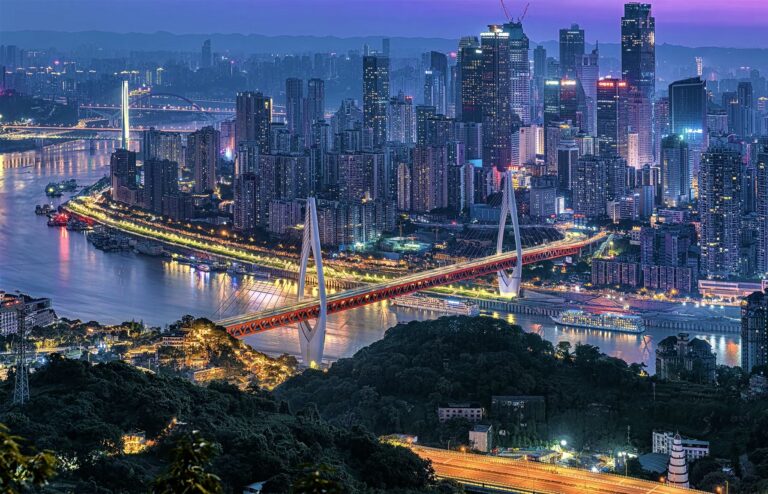
Before the 1990s, Chongqing’s nights were illuminated only by starlight and sparse streetlamps. But with the implementation of the “Lighting Project,” we moved beyond merely illuminating roads—we began “hanging” lights on the mountains. Due to Chongqing’s uniquely layered topography, the lighting was divided across multiple dimensions: the river surface up close, the roads in the middle, the skyscrapers in the distance, and the towering peaks atop the mountains. This three-dimensional effect has made Chongqing’s nightscape a landmark achievement, not just nationally but globally.
From American Inspiration to Chongqing’s Nightscape: A Visual Transplant Across the Pacific
Here’s a detail known only to insiders and old Chongqing locals. In the late 1990s, Chongqing’s urban planning officials made a special trip to the United States for research. Standing on the streets of New York and Los Angeles, they were stunned by the dazzling nightscapes.
They observed that a metropolis’s vitality persists after sunset through its illumination. Thus, they returned to Chongqing carrying this American inspiration. But where we Chongqing locals shine is that we didn’t simply copy it.
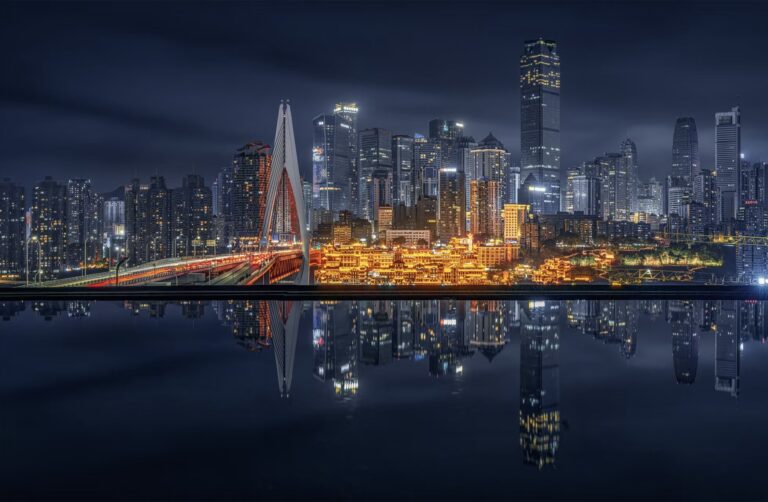
- Adapting to the Terrain: New York is flat, while Chongqing is three-dimensional. We harnessed the reflections on the Jialing and Yangtze Rivers, doubling the lights on shore into phantom images on the water.
- Artistic Fusion: Our planners blended the bright intensity of American commercial screens with the warm, tranquil hues of traditional Chinese stilted houses.
- My Personal Viewing Tips: If you want to see the purest “illuminated engineering” achievements, don’t just go to Hongyadong. Take a cable car across the river or head to One Tree Hill on South Mountain. There, you’ll witness how those original design blueprints became reality: thousands of lights climbing the hillside like pearls scattered across black silk. This awe-inspiring sight demands firsthand experience to truly grasp.
I’ve seen too many tourists sweating buckets on the road, desperate to snap that “car-swallowing” photo. Honestly, standing out in the crowd takes more than just a phone—you need some Chongqing-style agility.
Next, I’ll spill my secret Li Zi Ba photography tricks and pitfall-avoidance guide.
Li Zi Ba Light Rail Station Visitor Experience and Tips
How to Capture the Perfect Photo at Li Zi Ba Light Rail Station: Don’t Just Crowd with the Masses
To photograph a magical train passing through buildings, your shooting position and timing matter far more than filters.
- Prime Spots: Most people crowd the first-floor viewing platform directly facing the station. Instead, head to the second or third floor. Use the wider angle to include the Jialing River in your shot—this adds depth and dimension.
- Timing and Action: The classic “mouth-open train-swallowing” pose may be cliché, but it’s undeniably fun. Have your companion hold the phone at arm’s length and switch to burst mode—trains arrive faster than you think, and missing one means waiting another three minutes.
- Low-Angle Tilt-Up Shot: On the ground floor, hold your phone close to the ground and tilt upward, using the building’s lines as visual guides. This Chongqing photography technique amplifies the building’s imposing, surreal presence.
Peak Season & Safety Tips: Don’t risk your life on the road
As a lifelong Chongqing resident, I must issue a serious warning. Holiday crowds here create astonishing traffic surges. To safeguard your experience, keep these Liziba safety guidelines handy:
- Never stand on the road to take photos: Jia Bin Road, directly opposite Li Zi Ba, is a major city thoroughfare with extremely fast-moving traffic. Even for the best angle, never step beyond the viewing platform’s guardrails.
- Avoid peak hours: Try to steer clear of weekends between 2 PM and 5 PM. I recommend arriving around 9 a.m. or noon. The light hits the station’s facade perfectly at these times, and most tour groups are still having lunch, so you’ll wait in line less.
- Keep an eye on your belongings: When crowds get chaotic, watch your camera and wallet.
- My personal tip: If you find the viewing platform too packed to enter, walk a few steps further.
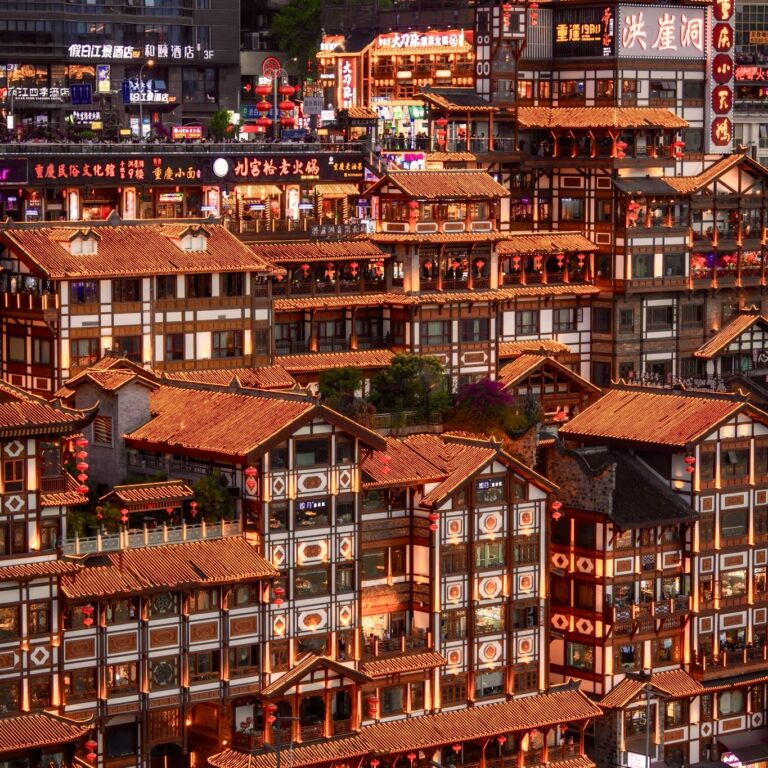
When it comes to Chongqing’s Hongyadong, its stilted houses reminiscent of Spirited Away are undeniably a must-see. But let me be brutally honest: Hongyadong’s charm lies in its “outer shell” rather than its “inner substance.”
Drawing from my experience as a Chongqing local, I’m here to pour a bucket of “cold water” on those eager to check it off their bucket list—and then light a “guiding lamp” to point you in the right direction.
Visiting Hongyadong and Safety Tips
Best Viewing Spots for Hongyadong: Don’t Get Lost Inside the Buildings
Many visitors rush straight into Hongyadong upon arriving in Chongqing, only to find crowds and commercial bubble tea shops. The true magic of Hongyadong lies in its multi-level light displays. To capture stunning nighttime shots of Chongqing, you need to find the optimal viewing locations:
- Qiansimen Bridge (Top Choice): Standing on the bridge deck, you can overlook the entire panorama of Hongyadong. When all the lights come on, the cluster of stilted buildings resembles a golden palace suspended over the Jialing River—that’s the true “magical Chongqing.”
- Grand Theatre Riverside: Take the rail transit to Grand Theatre Station and walk to the riverbank. Gazing across the Jialing River, Hongyadong’s reflection shimmers on the water. This blend of reality and illusion is a beauty you can’t achieve by sweating it out inside the buildings.
- Dai Jia Alley Pathway: Right next to Hongyadong, this cliffside walkway lets you observe the stilted buildings’ structure from a slightly elevated angle. It’s less crowded and perfect for photos.
Hongyadong Safety Warnings & Visitor Tips: Safety Comes First
As a local expert, I must give you a few “heads-up.” While stunning, Hongyadong’s dense wooden structures and overwhelming crowds present genuine safety concerns.
- Fire Safety Risks: As documented, the narrow passageways and wooden interiors make fire safety a critical concern. Safety at Hongyadong is no small matter—once inside, stay aware of emergency exits and avoid being glued to your phone.
- Crowd Overload Alert: During holidays, Hongyadong becomes a real-life version of Snake. If you’re with elderly individuals or children, I strongly advise avoiding the most congested areas. In such extreme crowds, the risk of stampedes or getting separated increases significantly.
- Avoid Unlicensed Taxis and “Guide Scams”: Near Hongyadong, you’ll encounter many people claiming to lead you to the “best viewing spots,” but most are simply trying to steer you toward overpriced attractions. Remember my Chongqing travel safety tip: Trust official signage and reliable navigation apps. Don’t fall for strangers’ promises of “shortcuts.”
- My honest advice: The lights at Hongyadong usually turn off around 11 PM. My suggestion is to finish sightseeing and taking photos on the opposite bank between 8 and 9 PM, then head over to Liberation Monument for a late-night snack. Keep Hongyadong in your camera, and keep safety and comfort for yourself.
- I often ponder: What does Liziba Station mean to us? It’s not just a building that “eats” the light rail—it’s more like a seed that unlocked Chongqing’s boundless imagination for spatial innovation.
The Future of Liziba Light Rail Station and Chongqing’s Transportation Development
Innovation and Challenges in Chongqing’s Future Transportation: From “Building-Penetrating Rail” to “Citywide Magic”
Liziba Station’s success lies not merely in its viral fame but in its profound impact on Liziba’s transportation. It proves to the world that when faced with topographical limits, planning isn’t about compromise—it’s about transcendence.
Today, this “unconventional” DNA has fully emerged in Chongqing’s future transportation blueprint. We now boast not only skyscraper-piercing light rail but also the Hongtudi Station buried 94 meters underground (equivalent to a 31-story building), alongside complex overpasses spanning two rivers with so many levels that even navigation systems struggle. Each transportation innovation carries forward the spirit of Liziba: seeking the greatest common denominator of efficiency within three-dimensional space. Challenges persist, however. As the city’s population grows, our generation of Chongqing transportation planners grapples with how to integrate smarter, greener rail systems while preserving the memory of the old city.
The Future of Building-Rail Integration: Boundary-Free Urban Spaces
Lizi Ba Station represents Version 1.0 of building-rail integration, while Chongqing’s future is advancing toward higher levels of integration.
Today’s transportation planning no longer settles for “making way for buildings” or “making way for roads,” but pursues true “seamless connectivity.”
- The Rise of TOD: In Chongqing’s new innovative designs, you’ll see more and more commercial complexes built directly atop transit hubs. You can grab bubble tea at the mall and step right onto the platform; returning to your office building, the elevator might connect directly to the station platform.
- Three-Dimensional Transportation Network: We are exploring how to multidimensionally integrate vertical greening, commercial spaces, and rail corridors. In the Chongqing of the future, buildings will no longer be mere cold walls—they will be transportation nodes and flowing arteries.
The Significance of Liziba Light Rail Station
I’d like to wrap up this surreal journey with a final thought. Let’s skip the fancy talk and get straight to the point. Many ask me: “Eden, will Chongqing ever build a station more magical than Liziba?” My answer is unequivocally yes. Because the spirit of “daring to be the first in the world” runs through the veins of Chongqing’s people. Liziba isn’t the end—it’s just the beginning. It tells the world that with enough imagination and technological support, architecture and transportation, humanity and nature, can absolutely find that perfect balance.
Li Zi Ba Light Rail Station’s contribution to Chongqing’s urban cultural landscape: More than just “piercing buildings,” it embodies our “spine.”
Looking back, Li Zi Ba has given this city far more than just a viral Instagram spot. Throughout Chongqing’s long journey of development, Li Zi Ba stands as an indomitable symbol, telling the world: In Chongqing, mountains are never obstacles—they are our stage for creativity.
Today, it stands as an undisputed cultural emblem of Chongqing. Every time you see that orange train deftly weaving through residential buildings, you witness the very essence of Chongqing’s character—as fiery and straightforward as hotpot, yet as resilient and adaptable as stilted houses. It has transformed Chongqing from a mere coordinate on the map into a marvel studied by the global architectural and tourism communities. This cultural identity is the source of our greatest pride as Chongqing natives and an integral part of this city’s soul.
The Call to Explore Chongqing’s Unique Landmarks and Transportation Marvels: Seeing Is Believing
No matter how many photos you take or videos you watch, nothing compares to experiencing it firsthand. I sincerely invite every friend: When exploring Chongqing, don’t just stay glued to your phone screen.
You must stand by the Jialing River yourself to feel the gentle breeze as trains glide overhead. You must ride Line 2 to experience that “3D spatial sensation” as the view shifts instantly between skyscrapers and river vistas. Beyond Liziba, countless unique landmarks and transportation marvels await your discovery.
Chongqing is like its hotpot—the longer it simmers, the richer the flavor. Stop hesitating, pack your bags, and come find me here! I’ll take you to see the most magical light rail, taste the most authentic hotpot, and experience the true charm of Chongqing.